
Our Sustainability
Environmental, Social and Governance (ESG)
The Board of Hextar Global Berhad (HGB) believes that introducing Environmental, Social and Governance (ESG) considerations in its business decisions is essential to achieve long term business success besides creating value for all its stakeholders, act as a strategic approach to support and empower communities, encourage social inclusivity and improve the environment. In terms of climate change, Hextar is committed to reinforcing the efforts towards decarbonization pathway while ensuring long-term value creation for the organization.
The balancing of ESG with the interests of stakeholders is essential in improving investor perception and public trust that works towards value enhancement for stakeholders in the long run. Climate change, directly and indirectly, affects our profitability and sustainable growth. It is crucial to protect these by mitigating and adapting to climate related risks.
HGB also believes that as a responsible corporate citizen, one would have an obligation in making the earth a better place to live in through responsible investing, besides weighing on an appropriate risk-return profile for its investments. Accordingly, HGB incorporated its principles of sustainability in its ESG policy and in line with our core values of Integrity, Loyalty and Hard Work.
FTSE4Good Bursa Malaysia Index and FTSE4Good Bursa Malaysia Shariah Index.

Our efforts to be a responsible and sustainable organization have enabled us to be included as a constituent in the FTSE4Good Bursa Malaysia Index and FTSE4Good Bursa Malaysia Shariah Index since June 2023. FTSE Russell (the trading name of FTSE International Limited and Frank Russell Company) confirms that Hextar Global Berhad has been independently assessed according to the FTSE4Good criteria, and has satisfied the requirements to become a constituent of the FTSE4Good Index Series. Created by the global index provider FTSE Russell, the FTSE4Good Index Series is designed to measure the performance of companies demonstrating strong Environmental, Social and Governance (ESG) practices. The FTSE4Good indices are used by a wide variety of market participants to create and assess responsible investment funds and other products.
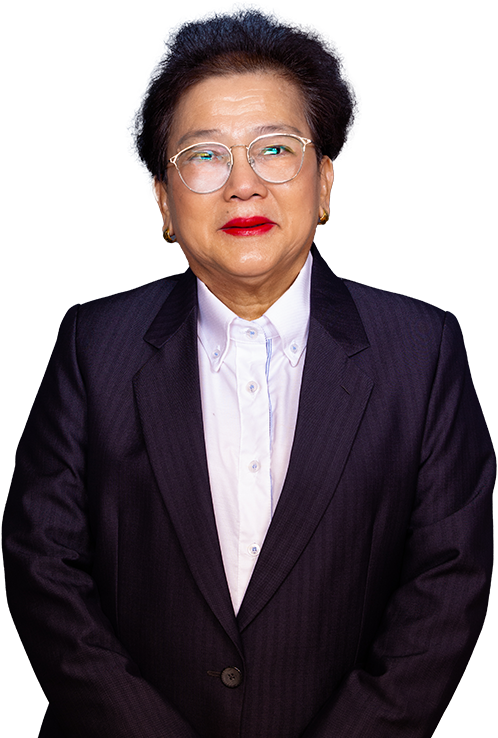
What our Managing Director Say
"Hextar Group is committed to meeting the target of Net Zero Carbon Emissions by 2050, aligned to Malaysia's national aspirations and in support of the Sustainable Development Goals (SDGs) on Climate Action."
"As we look into the future, we hope to achieve the Net Zero target through investing in low-carbon efficient technologies and renewable energy. We hope to continuously report our progress as an organization towards meeting this goal in the future."
ESG AT A GLANCE

ENVIRONMENTAL SUSTAINABILITY GOALS
GHG Emissions Initiatives
To achieve NET ZERO Carbon Emissions by 2050
To generate AT LEAST 10% electricity at manufacturing facilities from renewable energy source by 2030.
Our Solar PV installations at our manufacturing facilities in Pulau Indah, Selangor; Raub, Pahang; and Kemaman, Terengganu, as well as our corporate office in Klang, Selangor, continue to generate renewable electricity for our own operational use.
During FY2025, we successfully commissioned a new Solar PV system at our Kemaman, Terengganu manufacturing facility with a design capacity of 65.34 kWp, further expanding our renewable energy portfolio and increasing our on-site renewable electricity generation.
As of 31 December 2025, renewable energy generated from our Solar PV systems accounted for 16.91% of the total electricity consumption across our manufacturing facilities. This surpasses our initial target of generating 10% of manufacturing electricity from renewable energy sources, reflecting our commitment to accelerating the transition towards cleaner energy and achieving our long-term sustainability goals.
To reduce 10% of our absolute GHG emissions for Scope 1 and Scope 2 by 2030 with FY2024 as a baseline.
We are pleased to announce that, as of the end of FY2025, we have reduced our absolute Scope 1 and Scope 2 greenhouse gas (GHG) emissions by 6.9% compared with our FY2024 baseline. This represents significant progress towards achieving our target of a 10% reduction by 2030.
To reduce Class I product portfolio from base data of 4.34% to 2.05% and Class II product portfolio from 24.7% to 22.50% by year 2026.
| Class | |||||
|---|---|---|---|---|---|
| Class I (Highly Poisonous) | |||||
| Class II (Poisonous) | |||||
| Class III (Harmful) | |||||
| Class IV (Least Toxic) |
GHG EMISSIONS
In FY2025, the Group continued to collect the GHG data. Append below is the Group total GHG emission in Metric Tones of CO2 equivalent.
| Scope 1 | Tonnes CO2e | |||
| Scope 2 | Tonnes CO2e | |||
| Scope 3 | ||||
| Employee commuting | Tonnes CO2e | |||
| Business Travel (Land) | Tonnes CO2e | |||
| Business Travel (Air) | Tonnes CO2e | |||
| TOTAL Scope 1+2 | Tonnes CO2e | |||
| TOTAL Scope 3 | Tonnes CO2e | |||
| TOTAL Scope 1+2+3 | Tonnes CO2e | |||
Note:
- Scope 1 emissions cover the emissions from natural gas consumption from our production facilities.
- Scope 2 emissions cover purchased electricity from our production facilities and corporate offices and location- based calculation method is used.
- Carbon emissions from purchased electricity (Scope 2) are calculated based on the emission factors from Grid Emission Factor (GEF) in Malaysia, 2022-2024 (Provisional) [https://myenergystats.st.gov.my/documents/d/guest/grid-emission-factor-gef-in-malaysia-2022-2024-provisional-]
- Carbon emissions for Scope 3 – Bussiness travel and employee commuting are from Greenhouse gas reporting: conversion factors 2025 by Department for Environment, Food and Rural Affairs.(“DEFRA”)
| Materiality | Risk | Opportunities |
|---|---|---|
| Energy & Climate Change |
|
|
| Water Management |
|
|
| Waste Management & Environmental Compliance |
|
|
| Diversity, Equity and Inclusion (“DEI”) |
|
|
| Employee Management & Human Rights |
|
|
| Occupational Health & Safety |
|
|
| Community Contribution |
|
|
| Corporate Governance |
|
|
| Economic Performance |
|
|
| Quality assurance and product recognition |
|
|
| Supply Chain Management |
|
|
| Cybersecurity & Data Protection |
|
|
| Customer Satisfaction |
|
|
Additionally, we strive to meet the standards of global sustainability indices to improve our governance and disclosures on sustainability related risks in meeting our stakeholder expectations.
ENVIRONMENTAL COMPLIANCE
Environmental policies are put in place in our operations to govern our environmental management. The criteria for our environmental management are laid forth in ISO 14001 and 45001 Environmental, Health and Safety Management System Standards. In addition to our internal policies, we are committed to adhere to all applicable environmental laws and regulations, which include: -
| Laws and Regulations | Our Commitments |
|---|---|
Wastewater Discharge
|
|
Scrubber System
|
|
Waste Disposal
|
|
Noise Exposure
|
|
Chemical Management
|
|
Poison Management
|
|

SOCIAL SUSTAINABILITY GOALS
30% of the Board are women by year 2025
Achieved 33% women directors in the Board as at 31 December 2025.
30% of Top Management are women by year 2030
33% of Top Management are women as at 31 December 2025.
ZERO tolerance to discrimination, harassment, violence, forced labour and child labour in the workplace.
ACHIEVED ZERO incidences of discrimination or any violence in labour law in FY2025.
ZERO incidence of fatalities
ACHIEVED ZERO incidences of fatalities in FY2025.
ZERO tolerance to avoidable incidence of work-related injuries
ACHIEVED ZERO incidences of work-related injuries in FY2025.
ALL MANUFACTURING COMPANIES to be ISO 45001:2018 certified by 2030
Currently HEXTAR CHEMICALS SDN BHD (“Hextar Chemicals”),
CHEMPRO TECHNOLOGY (M) SDN BHD (“Chempro”),
ALPHA AIM (M) SDN BHD (“Alpha Aim”), and
HEXTAR KIMIA SDN BHD (“Hextar Kimia”) are certified with ISO 45001:2018
As of 31 December 2025, 50% of our manufacturing companies are certified with ISO 45001:2018.
LABOUR PRACTICES AND STANDARDS
WORK-RELATED INJURIES (EMPLOYEES)
| Description / Years | |||
|---|---|---|---|
| Hours Worked | |||
| Work Related Injuries | |||
| List Time Incident Rate | |||
| Work Related Fatalities |
Hextar's ultimate goal is to ensure all workers return home safely each day. We strive for zero fatalities annually by actively preventing and minimizing workplace incidents. In FY2024, we are proud to note that we achieved our goal of having zero incidences of reported injuries.
WORK-RELATED INJURIES (CONTRACTORS)
| Description / Years | |||
|---|---|---|---|
| Work Related Injuries | |||
| Work Related Fatalities |
Under our stringent control on occupational safety and health affairs in Hextar Group, we are pleased to inform that we have successfully achieved our goal of having zero incidences of fatalities for contractors providing services to Hextar.

EQUAL TREATMENT IN WORKFORCE

Labour Rights Policy
To protect employee’s human rights from the areas of forced labour, child labour and discrimination, with the inclusion of clear line of responsibilities for the Board, managers, supervisors and all employees.

Non-Discrimination Policy
To ensure that all employees are treated equally. Investigation will be conducted for any discrimination reported and disciplinary and corrective action will be taken, where appropriate.

Workplace Harassment Policy
To provide a safe, healthy and harassment-free working environment. Hextar has zero-tolerance to any form of harassment. Disciplinary measure will be taken for any breach of this policy.

Dispute Resolution Policy
To support prompt and fair resolution of all disputes of any nature. Employees should discuss any problems or concerns promptly with their immediate supervisor, or Head of Human Resource, if necessary, to resolve such issue.
These policies are available for reference at the Human Resource Department, or on our website at https://www.hextarglobal.com/ir.php in both English and Malay.

GOVERNANCE SUSTAINABILITY GOALS
ZERO tolerance to bribery or corruption
ACHIEVED ZERO bribery or corruption case in FY2025
There was no incident of bribery or corruption FY2025
ETHICAL AND TRANSPARENT BUSINESS CULTURE AND PRACTICES
In fostering our business towards SDG 16, our people and operations are guided by the following policies implemented across the Group:-

Corporate Code of Conduct & Ethics ("Code")
- Employees are required: -
- To act honestly and legally at all times;
- To avoid any conducts that could risk or damage the Group’s reputation;
- To ensure confidentiality of the Group’s information; and
- To avoid personal interest being ahead of the Group’s interest.
- All applicable laws, rules and regulations must be adhered to accordingly.
- Any conflict of interest must be avoided/ disclosed promptly.
- Disclosure of confidential information to unauthorised personnel and insider trading are strictly prohibited.
- All employees must not engage in any fraudulent or dishonest activity.
- Discrimination and harassment in workplace are prohibited.

Anti-Bribery and Corruption Policy ("ABCP")
- As per the Malaysian Anti-Corruption Commission Act 2009 and the Guidelines on Adequate Procedures issued by the Prime Minister’s Department, the ABC Policy was introduced as part of the Group’s commitment to good corporate governance and to eradicate any form of bribery and corruption.
- The Group has zero-tolerance against all forms of bribery and corruption.
- The Group is committed to acting professionally, fairly and with integrity in all business relationships and dealings.
- Head of Compliance Unit in the Group, Abdul Wahid Bin Abu Bakar has been recognized and commissioned as Certified Integrity Officer (CeIO) by Malaysian Anti-Corruption Academy.
- Due diligence shall be conducted before entering into any formalised relationship.
- "No Gift" policy is implemented.
- Facilitation payments are strictly disallowed.

Whistle Blowing Policy
- To make report for any suspected and/or known fraud or unethical/improper conducts.
- For every disclosure made in good faith, all concerns or complaints raised will be treated fairly and with confidentiality in order to protect the whistleblower.
- The whistleblowing policy has been made aware to all employees under Hextar through mandatory orientation programme which were attended by all employees.
- Investigation will be conducted and appropriate disciplinary actions will be undertaken, if applicable. For year under review, we recorded zero whistleblowing case.

Supply Chain Policy
- The policy acts as a best practice approach to sustainable procurement and sets out the guiding principles in our supplier selection process, which prioritizes suppliers who adopt sustainability practices in their organizations and business dealings especially in the area of :-
- Energy use
- Climate change
- Water use
- Biodiversity impacts
- Pollution
- Waste reduction
- Resource use
- Hextar’s suppliers are expected to comply with all applicable laws, codes or regulations of the countries, states and localities in which they operate.
- Suppliers must also ensure that their own vendors, including temporary labour agencies, are in compliance with such laws and regulations. They must also align their practices with any published standards for their industry.
These policies are available for reference on our website at https://www.hextarglobal.com/ir.php
Hextar Global Berhad is committed to
The United Nations Sustainable Development Goals (UN-SDG) and Malaysia’s Shared Prosperity Vision 2030 (SPV2030) towards decarbonization pathway while ensuring long-term value creation for the organization. As part of our commitment to sustainable and responsible business practices, Hextar Global Berhad has embedded the Ten Principles of the United Nations Global Compact into strategies and operations, and committed to respecting human and labour rights, safeguarding the environment, and working against corruption in all its forms.
End poverty in all its forms everywhere.
End hunger, achieve food security and improved nutrition and promote sustainable agriculture.
Ensure healthy lives and promote well-being for all at all ages.
Ensure inclusive and equitable quality education and promote lifelong learning opportunities for all.
Achieve gender equality and empower all women and girls.
Ensure availability and sustainable management of water and sanitation for all.
Ensure access to affordable, reliable, sustainable and modern energy for all.
Promote sustained, inclusive and sustainable economic growth, full and productive employment and decent work for all.
Build resilient infrastructure, promote inclusive and sustainable industrialization and foster innovation.
Reduce inequality within and among countries.
Make cities and human settlements inclusive, safe, resilient and sustainable.
Ensure sustainable consumption and production patterns.
Take urgent action to combat climate change and its impacts.*
Conserve and sustainably use the oceans, seas and marine resources for sustainable development.
Protect, restore and promote sustainable use of terrestrial ecosystems, sustainably manage forests, combat dessertification, and halt and reverse land degradation and halt biodiversity loss.
Promote peaceful and inclusive societies for sustainable development, proivde access to justice for all and build effective, accountable and inclusive institutions at all levels.
Strengthen the means of implementation and revitalize the Global Partnership for Sustainable Development.